
Digital Environments and Cognitive Overload
Learning with ACRE - 060

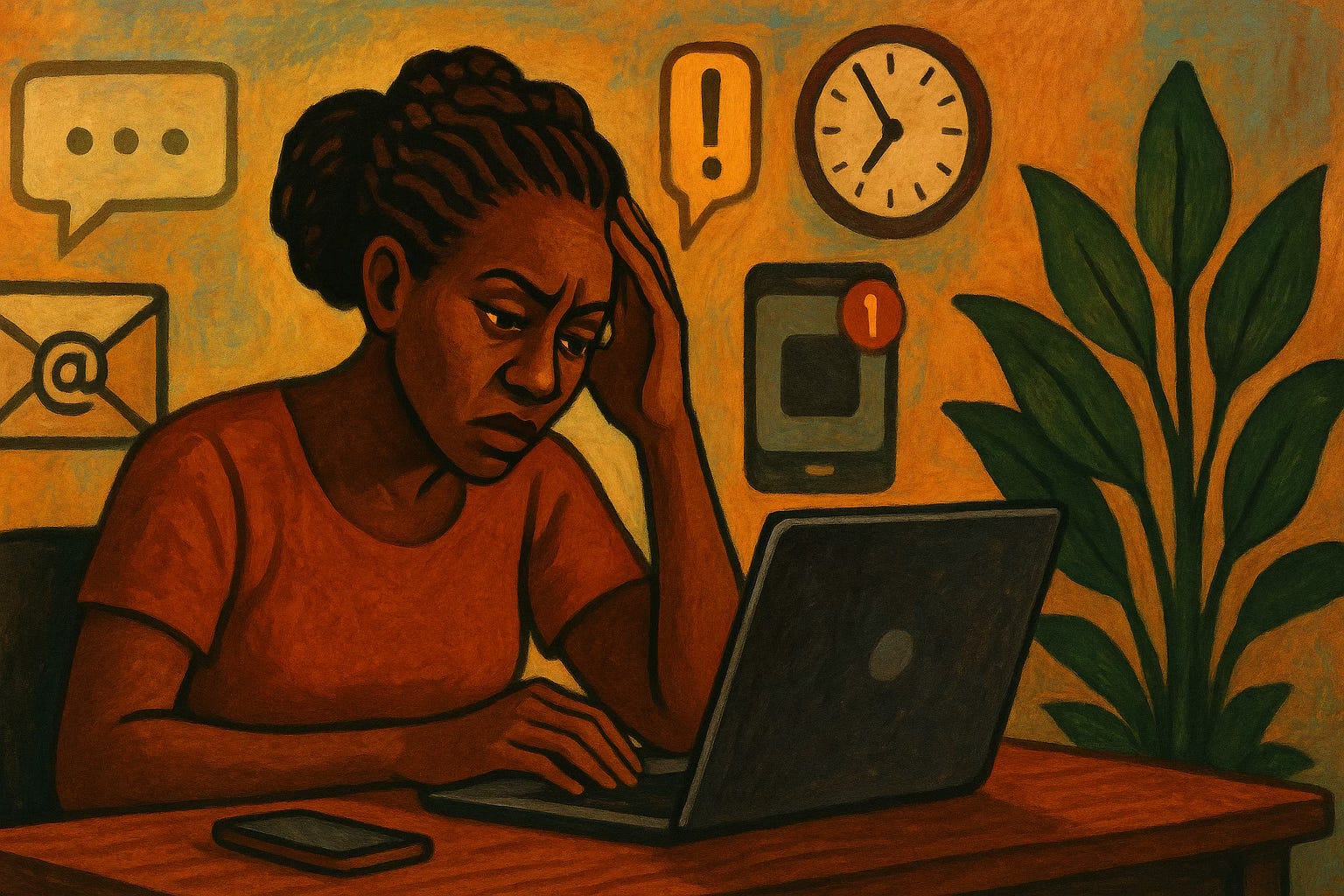
Digital environments and cognitive overload are modern organisational challenges arising from digital tools, platforms, and notifications that continuously fragment our attention. Emails, messaging apps, dashboards, project management tools, video calls, and social feeds all compete for limited cognitive resources, often simultaneously. While these technologies are designed to improve efficiency, speed, and connectivity, their cumulative effect can quietly overwhelm the brain’s capacity to focus intensely, think creatively, and make considered decisions.
In contrast to these digitally saturated conditions, creativity relies on sustained attention, mental spaciousness, and the ability to sit with ambiguity. Creative insight rarely arrives on demand or at speed. It emerges when the mind has time to wander, connect ideas, and explore possibilities without constant interruption. Cognitive overload, by contrast, pushes the brain into a perpetual state of reaction. When attention is repeatedly disrupted, thinking becomes shallow, rushed, and increasingly habitual rather than exploratory.
Over time, this pattern shapes how people approach problems. Instead of asking better questions or reframing challenges, they focus on clearing notifications, closing loops, and moving quickly to resolution. The environment trains the mind to prioritise immediacy over imagination.
Why It Matters
Modern work environments reward responsiveness, with instant messaging norms, rapid email turnaround expectations, and always-on calendars signalling that availability matters more than depth of thought. Speed, visibility, and constant connectivity are often interpreted as signs of commitment, engagement, and productivity. In many cultures, being busy and reachable has become synonymous with being valuable.
However, this comes at a hidden cognitive cost. The human brain is not designed for continuous partial attention. Every interruption, even brief ones, carries a cognitive switching cost as the brain disengages from one task and reorients to another. These micro-costs accumulate throughout the day, leaving people mentally drained without having engaged in meaningful or creative work.
Over time, digital overload erodes the conditions required for creativity and innovation. Instead of extended periods of focus, people experience:
Fragmented thinking and reduced depth
Increased mental fatigue and decision exhaustion
Heightened stress and reduced tolerance for complexity
A tendency to default to familiar ideas rather than generate new ones
For organisations that depend on innovation, adaptability, and problem-solving, this creates a paradox. The very tools meant to accelerate work and collaboration can quietly undermine original thinking, learning, and long-term value creation.
What It Is in Practice
Cognitive overload is not simply about having too much to do; it differs from busyness in that the real strain comes from managing too many competing demands on attention at once. A full workload can still be manageable if attention is focused. Overload occurs when attention is constantly pulled in multiple directions, preventing the brain from fully engaging with any one task.
In digital environments, this often shows up as:
Multiple communication channels demanding immediate response
Back-to-back virtual meetings with no recovery or reflection time
Constant alerts that interrupt concentration and thought flow
Information presented without prioritisation, context, or narrative
In such conditions, the brain shifts into a form of cognitive survival mode. It optimises for speed, certainty, and task completion rather than exploration, insight, and learning. Creative thinking, which requires patience, reflection, and mental breathing room, is deprioritised.
Importantly, digital overload is rarely caused by technology alone. Norms, expectations, and unspoken rules about availability, responsiveness, and performance shape it. Technology amplifies culture. Without intentional design, it reinforces habits that work against creative focus.
How to Implement Healthier Digital Environments
Reducing cognitive overload does not require abandoning technology or slowing work unnecessarily. It requires using digital tools more intentionally and designing shared norms that protect attention as a valuable resource.
1. Design for Focus, Not Just Connectivity
Create clear expectations around availability and response times? Not every message requires an immediate reply. Explicit agreements reduce the pressure to be constantly ‘on’ and free up mental space for deeper work.
2. Introduce Focused Work Windows
Encourage protected periods for deep work with notifications switched off and meetings avoided. Even short, regular blocks of uninterrupted time can significantly improve creative flow, problem-solving quality, and satisfaction at work.
3. Reduce Digital Noise
Audit communication channels and tools. Remove, simplify, or consolidate platforms that duplicate information or unnecessarily fragment attention. Fewer tools, used well, often lead to more clarity and less cognitive strain.
4. Rethink Meeting Culture
Challenge the default of constant meetings. Introduce meeting-free blocks or days to allow for thinking, synthesis, and recovery. When meetings are necessary, design them with a clear purpose, boundaries, and outcomes to minimise mental drain.
5. Build Attention Awareness
Help individuals recognise the signs of cognitive overload, such as irritability, difficulty concentrating, or decision fatigue. Normalise conversations about mental capacity and attention management. Awareness is a prerequisite for sustainable change.
What Becomes Possible If You Do
When digital environments support focus rather than fragmentation, creativity has room to breathe. What would change in your own work, or across your team, if attention were treated as a scarce and valuable resource rather than something endlessly available? People begin to regain a sense of control over their attention, energy, and thinking.
Over time, this unlocks:
Improved creative focus and sustained flow
More thoughtful and intentional use of technology
Higher quality ideas and deeper problem-solving
Reduced cognitive fatigue and risk of burnout
Greater resilience in complex, fast-changing environments
Perhaps most importantly, work begins to feel more meaningful and humane. Instead of reacting to constant digital demands, people can engage more fully with the problems that truly matter and the ideas that genuinely move work forward.
Digital environments will continue to evolve. The real choice lies in whether we allow them to shape our thinking by default, or whether we design them deliberately to support clarity, creativity, and human potential.
Join us at ACRE30, Africa’s Premier Creativity and Creative Thinking Conference in 2026 at Klein Kariba, South Africa! https://acreconference.com